
Mantecatura
The last thirty seconds, in which pasta, fat and starchy water stop being three things and become one thing. Every sauce you have ever admired was made in this moment. So was every sauce you have ever ruined.
What the word means
From mantecare — to work something until it turns creamy. It is the final vigorous toss, off the heat, where the fat and the starchy water are forced into an emulsion and the sauce suddenly turns glossy and clings. It is not stirring. Stirring is polite. This is not polite.
Fire off. This is not optional.
Here is the whole technique in one sentence: take the pan off the heat before the cheese goes in.
Cheese is protein suspended in fat. Heat it too far and those proteins tighten and squeeze the fat out — they curdle. That is exactly what has happened when a sauce turns from smooth to a bowl of little rubbery stones sitting in a slick of grease. Nothing was wrong with your cheese. The pan was simply too hot to be trusted with it.
Off the heat, with starch in the water and a lot of movement, the same proteins do the opposite: they emulsify, and you get gloss.
“Fire off. Because now we mix everything together, and if the heat is too strong, the pecorino separates, becomes little stones, and then everybody pretends this was the plan. It was not the plan.”
— Episode One
How to do it
-
Take the pan off the heat — and wait
Off the burner completely, and then give it a few seconds. A pan straight off a flame is still much too hot. The waiting is part of the technique, not a pause in it.
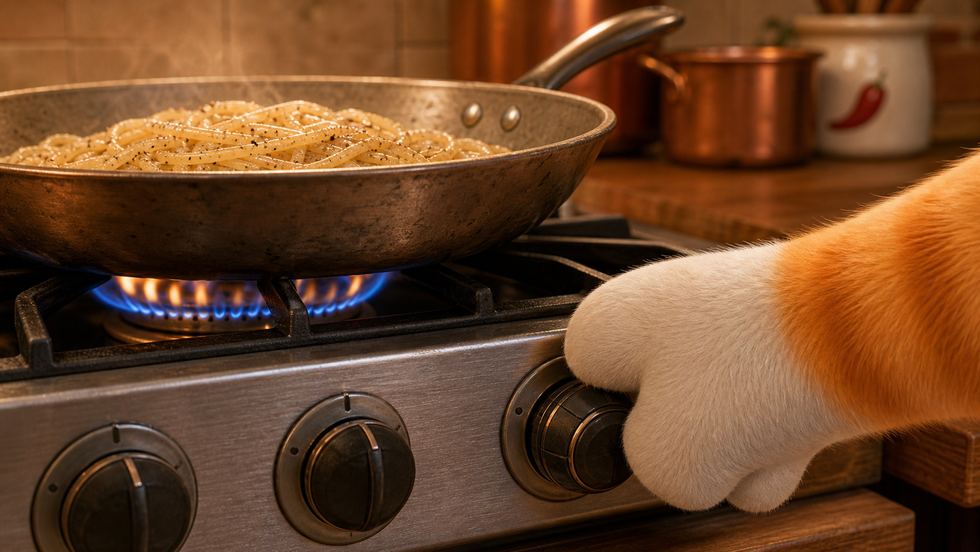
Off the burner completely. A pan straight off a flame is still far too hot — the waiting is part of the technique. -
Add the cheese, or the butter
Grated cheese, a cheese cream, or cold butter — whatever the dish asks for — goes in now that the pan has calmed down.
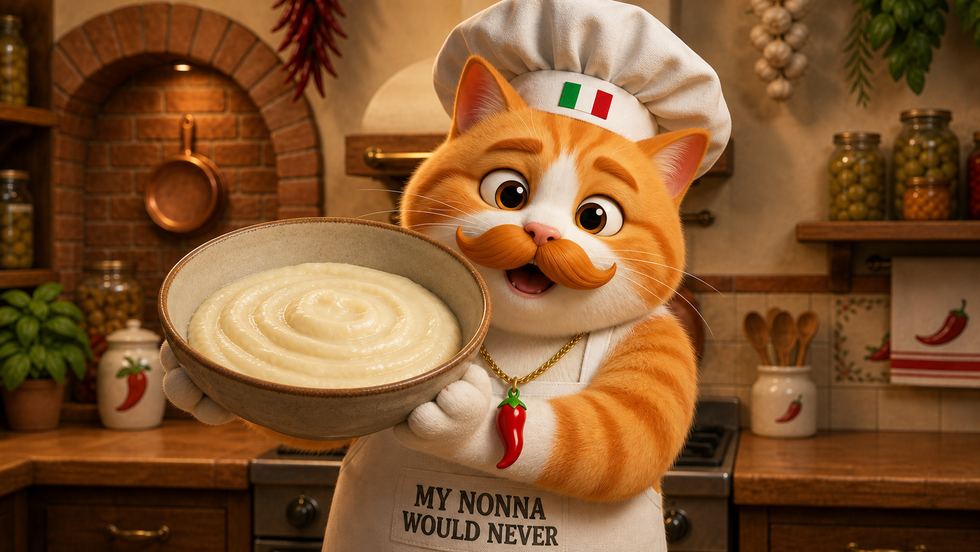
Whatever the dish asks for — grated cheese, a cheese cream, cold butter — it goes in now that the pan has calmed down. -
Toss like you mean it
Continuously. The movement is what does the work: it is what drives the fat, the starch and the water together. Do this lazily and it will simply not come together, and you will blame the recipe.
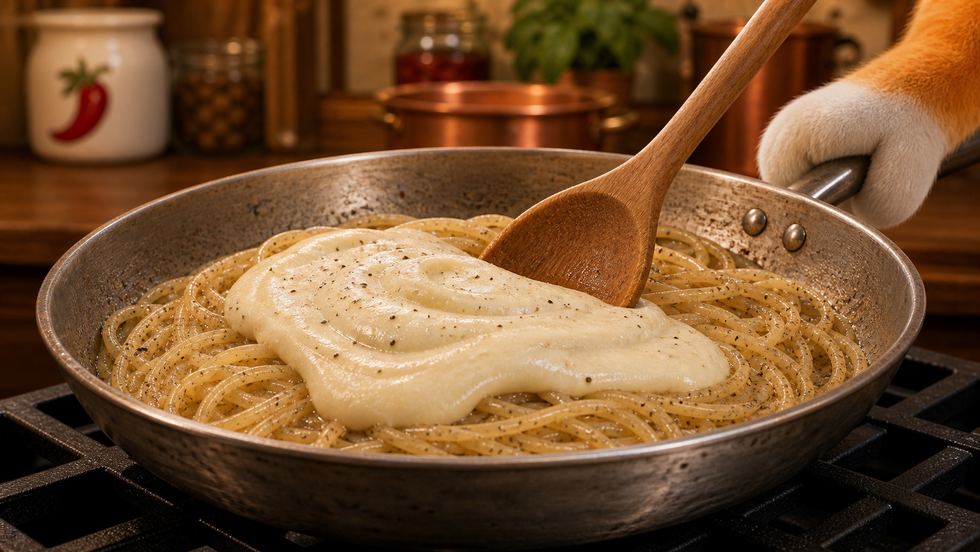
The movement is what does the work: it drives the fat, the starch and the water together. -
Loosen with starchy water if it tightens
A small splash of the reserved pasta water, still tossing, until the sauce is glossy and coats every strand. Small splashes. Always small splashes.
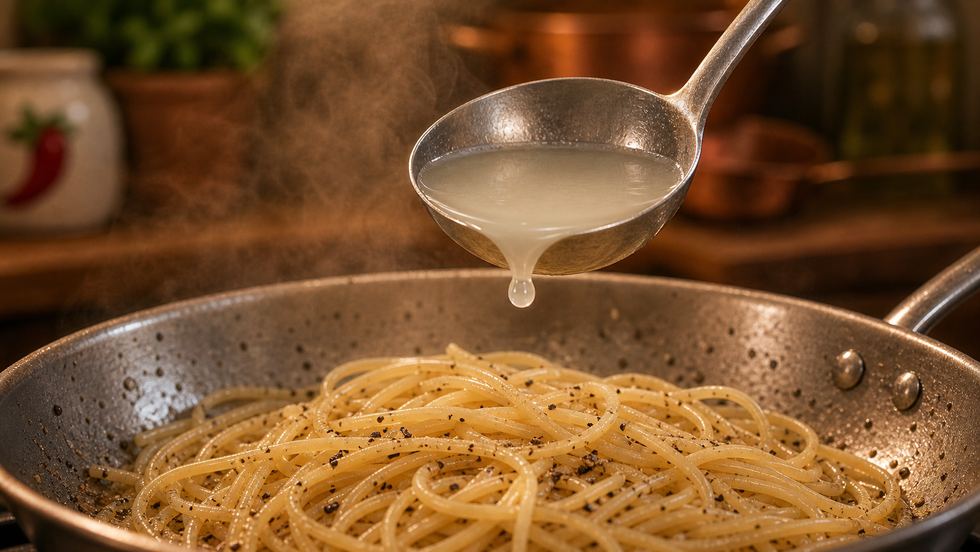
Small splashes, still tossing, until it is glossy and coats every strand.
And sometimes, a lid
You will see mantecatura done with the lid on, and you will wonder whether you have been doing it wrong all this time. You have not. The lid belongs to risotto.
There the order is: heat off, cold butter and grated cheese in, and then the pot is covered and left alone for a couple of minutes. This is not laziness. It lets the temperature even out and the starch settle before any beating starts. Then the lid comes off and the risotto is worked hard, front and back, until it moves in a wave — all'onda.
For pasta in a pan this is not the tradition, and I would not start it now. The pan is shallow, the pasta is already hot, and a covered rest gives a sauce time to tighten when what you want is for it to loosen. In a pan the movement is what emulsifies. Waiting is not movement.
But look at what the lid is actually buying, because it is the same thing this whole page is about: a temperature the cheese can survive. On a risotto the lid brings the heat down and holds it there. In a pan, those few seconds of waiting do the identical job. Two kitchens, two gestures, one idea.
If it splits anyway
- It has gone grainy and greasy
- Off the heat, add a splash of warm — not boiling — pasta water and toss hard. A sauce that has only just split can very often be brought back. One that has been sitting on a flame for a minute cannot.
- It is gluey and stiff
- Too much starch, not enough water. Loosen it with warm pasta water, a little at a time.
- It never turned glossy at all
- Not enough movement, or not enough starch in the water. Next time cook the pasta in less water — see the water from the pasta.
The clearest example on the show is cacio e pepe, which has no cream and no butter to hide behind — mantecatura is the only thing turning cheese and water into a sauce.