
The water from the pasta
You have been throwing away the most useful thing in the kitchen. I say this gently. I say it as a friend. But you have.
What is actually in there
When pasta boils, it releases starch into the water. That is why the water goes cloudy — the cloudiness is the ingredient. Starch in water does something very specific: it lets fat and water hold hands, when normally they refuse to. This is called an emulsion, and it is the difference between a sauce that coats every strand and a sauce that sits in a puddle at the bottom while the pasta stays naked and embarrassed.
“Without starch, the cheese panics and people start saying things like: ‘I prefer it this way.’ No, you don't.”
— Episode One
So use less water
Here is the part nobody tells you. Everyone says "a big pot, plenty of water." For a sauce that depends on starch, this is exactly backwards. The same amount of starch spread through twice the water is half as concentrated, and half as useful.
Use enough water to cover the pasta and not much more. The water goes properly cloudy, it does its job, and you finish with a mug of something genuinely powerful instead of a sink of grey.
Salt it moderately. Concentrated water means concentrated salt too — and if you are cooking with pecorino or any hard salty cheese, the cheese is bringing most of the salt already.
How to use it in the pan
Two rules, and they are both about patience.
Take the pasta out early. Two to three minutes before the packet says. It should still be too firm to serve. It finishes cooking in the pan with the sauce, absorbing flavour instead of just visiting it.
Add the water a little at a time. A small splash, stir, let it reduce until the pan is nearly dry — then another small splash. Each round leaves behind more starch and less water, which is precisely what you are building. Pour it all in at once and you have made soup, and the starch never concentrates enough to hold anything together.
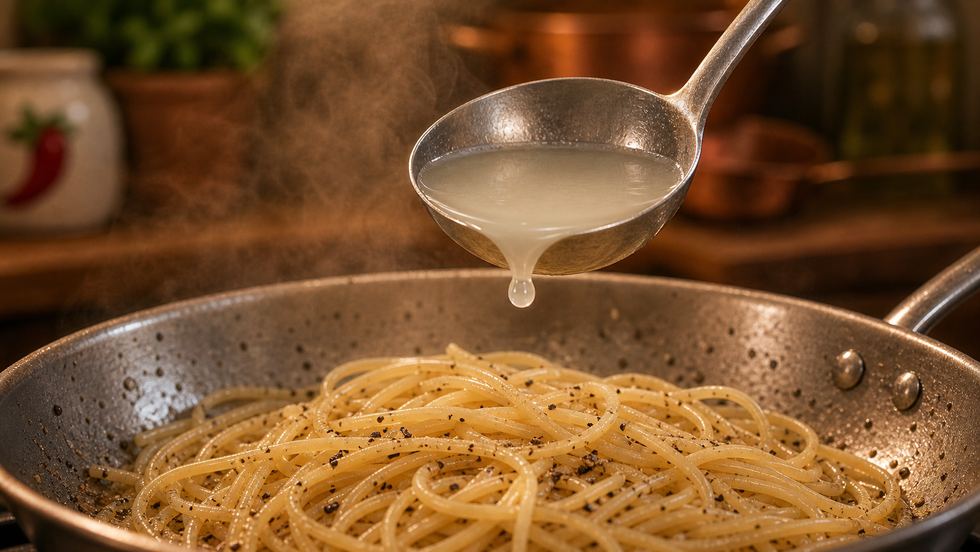
“You don't drown the pasta. You drive it to the swimming pool.”
— Episode One
Two things people get wrong
- Rinsing the pasta after draining
- This washes off the surface starch — the exact layer that helps the sauce grip. Never rinse pasta that is going into a sauce.
- Forgetting to keep any
- Everybody does this once. Keep a mug of it before you drain, not after, when it is in the sink and gone forever and you are standing there like a person with regrets.
You will see this doing real work in cacio e pepe, where there is no cream and no butter, and the starchy water is quite literally holding the whole sauce together. Then read mantecatura, which is what you do with it at the last moment.